
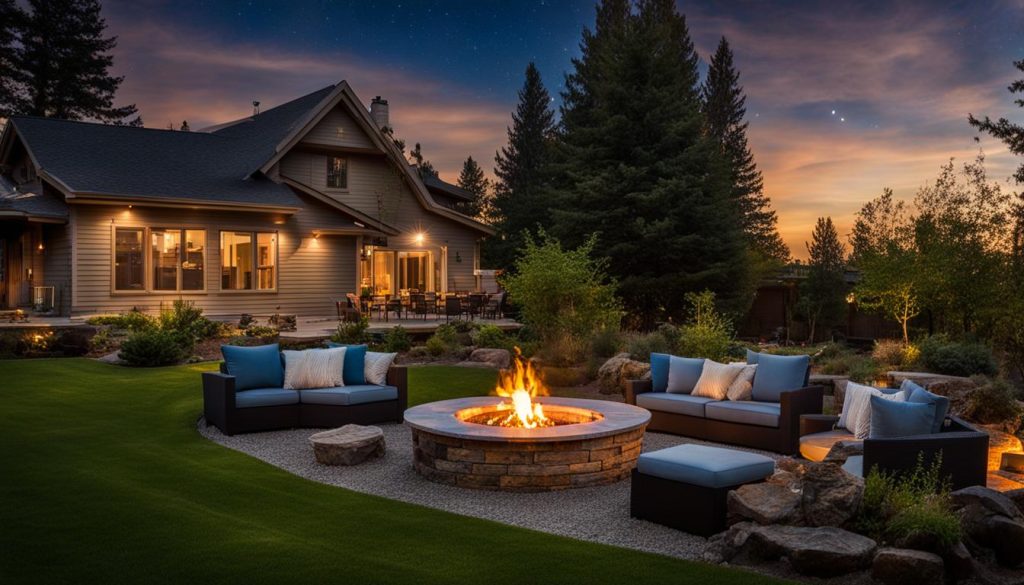
When it comes to creating a cozy outdoor space, a fire pit can be a fantastic addition. It provides warmth, ambiance, and the perfect gathering spot for friends and family. However, it’s important to prioritize safety when deciding where to place your fire pit. You may be wondering, how far should a fire pit be from the house?
According to fire pit safety guidelines, it is recommended to keep a fire pit at least 10 feet away from anything flammable, including your house and overhead tree branches. This distance helps prevent the risk of accidental fires and ensures the safety of your home. Additionally, it’s crucial to avoid placing the fire pit on a grassy surface, wood deck, or enclosed porch unless the owner’s manual specifically allows it.
To help you make informed decisions about fire pit placement and ensure a safe outdoor experience, let’s dive deeper into the regulations and guidelines surrounding fire pits near houses, as well as essential tips for fueling, lighting, and extinguishing the flames.
Key Takeaways:
- It is recommended to keep a fire pit at least 10 feet away from anything flammable, including your house and overhead tree branches.
- Check your local regulations for specific fire pit placement guidelines, as they may vary.
- Use dry, seasoned wood or the appropriate fuel recommended for your fire pit.
- Avoid using flammable substances like lighter fluid, gas, or kerosene to light the fire.
- Have fire extinguishing tools like a bucket of sand or a fire extinguisher nearby in case of emergencies.
Fire Pit Regulations for House and Location Guidelines
When it comes to enjoying a cozy fire pit in your backyard, safety should be your top priority. Understanding the fire pit regulations and guidelines for your house and its proper location is critical to ensure everyone’s well-being. Let’s explore the key considerations and precautions you should keep in mind.
Fire Pit Safety Distance
One of the most important aspects of fire pit regulations is the required safety distance from any flammable structures or surfaces. While the specific distance may vary depending on your local regulations, it’s generally recommended to keep the fire pit at least 10 to 25 feet away from your house, trees, sheds, vehicles, and wood decks. Keeping a safe distance helps prevent the risk of accidental fires and potential property damage.
Positioning Near Your House
When positioning your fire pit near your house, it’s crucial to consider any overhanging branches. Most municipalities recommend a standard clearance of 21 feet between the fire pit and any tree branches. This prevents the risk of sparks igniting nearby foliage and reduces the chance of fires spreading to your property.
Local Guidelines and Property Line Distance
Remember to check your local guidelines for any specific regulations regarding the minimum distance between the fire pit and your property line. Some municipalities may have additional requirements to ensure the safety of neighboring properties. By following these guidelines, you can enjoy your fire pit responsibly while minimizing any potential risks.
Fire Pit Fuel and Starting the Flames
When it comes to fueling your fire pit, it’s crucial to use the right materials to ensure a safe and enjoyable experience. For wood-burning fire pits, seasoned firewood is the best choice. Use dry wood that was cut at least six months prior to burning. This helps prevent excessive smoke and sparks, ensuring a cleaner and safer fire. Avoid using green or freshly cut wood as it tends to produce more smoke and can create a hazard.
If you have a gas fire pit, it’s essential to follow the manufacturer’s instructions for the recommended fuel type. Only use the specific fuel that the pit is designed to burn. Using the wrong fuel can lead to smoky flare-ups and can potentially damage the fire pit. Make sure all vents are clear and free from debris to prevent any ventilation issues.
When it comes to starting the flames, it’s important to avoid using lighter fluid, gas, or kerosene. These substances can be dangerous and may lead to accidents or flare-ups. Instead, use natural fire starters, such as crumpled newspaper or fire starter sticks, to ignite the fire. Place them underneath the firewood or in between the gas burner elements, following the manufacturer’s instructions. This will help you start the flames safely and efficiently.
Taking Safety Precautions
While fueling and starting the fire pit, it’s crucial to prioritize safety. Keep a safe distance from the fire and avoid wearing loose clothing that can easily catch fire. Always have a fire extinguisher nearby and know how to use it properly. It’s also a good idea to keep a bucket of sand or a fire blanket at hand to smother the flames if necessary. By taking these precautions and using the right fuel and starting methods, you can enjoy a cozy and secure fire pit experience.

Putting out a Fire Safely
When it’s time to extinguish your fire pit, it’s important to do so safely and effectively. There are various methods you can use depending on the type of fire pit you have. If your fire pit can withstand water, you can pour water onto the flames to extinguish them. However, it’s essential to check your fire pit’s specifications beforehand to ensure it won’t be damaged by water. If water is not recommended, keeping a bucket of dry sand nearby is a great alternative. Sand can smother the fire and help cool down any remaining embers.
If you’re using a gas or propane fire pit, the first step is to turn off the fuel supply. This will inhibit the fire from continuing to burn. Once the fuel is turned off, you can place a fireproof cover over the fire pit to suffocate the flames. It’s crucial to remember that gas and propane fire pits can remain extremely hot for a while, so give it sufficient time to cool down before touching or storing it.
Additionally, having a fire extinguisher nearby is always a wise precaution. A dry-chemical extinguisher with a Class B and C rating is suitable for extinguishing fires that involve flammable liquids and electrical equipment, which includes fire pits. Familiarize yourself with how to use the fire extinguisher correctly so that you can act swiftly in case of an emergency. It’s also advisable to have a cellphone with you to call the local fire department if the situation escalates beyond your control.
Remember to prioritize safety and caution when putting out a fire in your fire pit. By following these extinguishing methods, you can ensure the safety of yourself, your property, and those around you.

Conclusion
In conclusion, ensuring the safety of your home and loved ones should be your top priority when it comes to placing a fire pit in your backyard. By following a few simple guidelines, you can enjoy the warmth and ambiance of a fire pit while minimizing the risk of accidents or damage.
First and foremost, maintain a safe distance between your fire pit and your house. It is recommended to keep a minimum safe distance of 10 feet to reduce the risk of accidental fires. Also, make sure to consider the distance from overhead tree branches, as falling embers can ignite flammable objects.
Furthermore, be mindful of the regulations set by your local municipality. Each area may have its own guidelines regarding fire pit placement and distance from other structures. Always check with your local authorities to ensure compliance and safety.
Lastly, remember to use the correct fuel for your fire pit and avoid using flammable substances for lighting. Follow the manufacturer’s instructions and guidelines to ensure optimal performance and safety. With the appropriate fuel and safe lighting practices, you can enjoy a controlled and pleasant fire pit experience.
By adhering to these recommendations and being vigilant about safety measures, you can create a cozy and inviting outdoor space while keeping your home and loved ones safe. Remember, the recommended safe distance for a fire pit from your house is at least 10 feet, but always prioritize safety above all else.
FAQ
How far should a fire pit be from the house?
It is recommended to keep a fire pit at least 10 feet away from anything flammable, including your house and overhead tree branches.
Are there any regulations for fire pit placement near a house?
Many cities and towns have regulations in place regarding the use and placement of fire pits. It is important to check your local guidelines for the minimum distance between the fire pit and the property line.
What fuel should I use for my fire pit?
For wood-burning fire pits, it is important to use dry, seasoned wood that was cut at least six months earlier. For gas pits, only use the fuel that the pit is built to burn.
How do I extinguish a fire pit?
You can use water or sand to extinguish a flare-up, but make sure your fire pit can withstand water before using it. For gas or propane pits, turn off the supply before attempting to extinguish the fire. It is also recommended to have a fire extinguisher on hand.
