
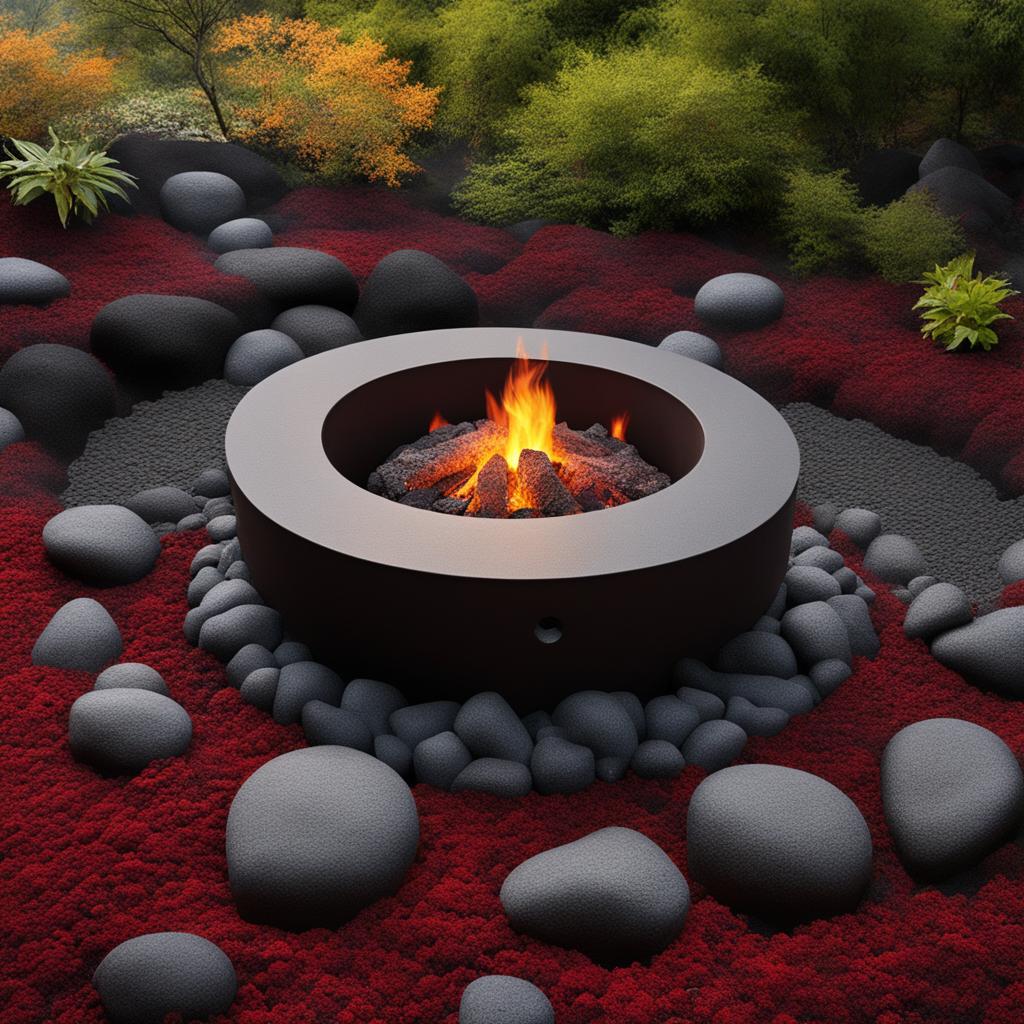
Welcome to our comprehensive guide on how much you can cover the ring with rocks in a firepit. Fire pits are a fantastic addition to any outdoor space, offering warmth, ambiance, and a gathering place for friends and family. With the right safety measures and proper rock coverage, you can create a safe and visually appealing fire pit experience.
Key Takeaways:
- The amount of rocks needed to cover a fire pit ring depends on its size and personal preference.
- For gas fires, it is recommended to cover the fire ring with enough lava rocks for a natural look.
- Wood fires require a protective layer of lava rocks at least 4-5 inches deep.
- Ensure proper fire pit placement, ventilation, and adhere to safety guidelines.
- When arranging rocks for a gas fire pit, ensure they are dry and follow the recommended arrangement for gas flow and heat distribution.
Fire Pit Safety Guidelines
When it comes to using a fire pit, safety should be your top priority. To ensure a safe and enjoyable experience, it’s essential to follow some fire pit safety guidelines. Here are a few key points to keep in mind:
Proper Fire Pit Placement
Choose a well-ventilated area for your fire pit and avoid setting it up indoors or on a covered patio. It’s important to cut low-hanging branches and keep the fire pit away from any wood surfaces that could potentially catch fire. Maintaining a safe distance from flammable objects, such as trees, plants, and structures, is crucial to prevent accidents.
Protective Layer of Lava Rock
Using a protective layer of lava rock at the bottom of your fire pit is highly recommended. This layer should be at least 4-5 inches deep for wood fires and enough to cover the fire ring for gas fires. Lava rock helps to distribute heat evenly and protects the bottom of the fire pit from excessive heat. It’s important to note that ordinary rocks or gravel should not be used as a substitute for lava rock, as they can potentially explode when heated.
Safety Measures
For added safety, it is advisable to keep a fire extinguisher nearby when using a fire pit. Wearing safety gloves when handling and lighting the fire pit is also important. Additionally, ensure that gas connections are properly installed and comply with local codes to prevent any gas leaks or hazards. Following these safety measures will help you enjoy your fire pit responsibly and with peace of mind.
By adhering to these fire pit safety guidelines, you can ensure a safe and enjoyable experience while using your fire pit. Remember, safety should always be your top priority when it comes to fire pit usage.
Tips for Fire Pit Usage
When it comes to using a fire pit, there are some important tips to keep in mind for a safe and enjoyable experience. Whether you’re using a gas fire pit or a wood-burning one, these tips will help you make the most of your fire pit:
1. Safety First
Before lighting a fire in your pit, ensure you have a fire extinguisher nearby and always wear safety gloves. Safety should be your top priority, so make sure to follow all local regulations and guidelines for fire pit usage. This includes keeping fires small and placing the fire pit at least 10 feet away from any trees, plants, or structures.
2. Proper Gas Connections
If you’re using a gas fire pit, it’s crucial to ensure proper gas connections. The gas supply should be secure, and any connections should be tight and leak-free. Adhere to local codes and regulations when installing a gas fire pit to ensure safe usage.
3. Enhance the Natural Look
If you have a gas fire pit and want to hide the fire ring, consider covering it with additional lava rock. This not only enhances the natural look of your fire pit but also helps with heat distribution. Make sure to use lava rock specifically designed for fire pits, as regular rocks or gravel can potentially cause explosions when heated.

By following these tips, you can safely and effectively use your fire pit for cozy gatherings and memorable moments. Whether you prefer the modern look of a gas fire pit or the traditional charm of a wood-burning one, these tips will help you make the most of your fire pit experience.
Using Lava Rocks for a Fire Pit
If you’re looking for a clean and modern look for your fire pit, lava rocks are a great option. Not only do they provide a visually appealing aesthetic, but they also offer ease of maintenance. When using lava rocks in a fire pit, it’s important to follow a few guidelines to ensure safety and optimal usage.
To use lava rocks in a fire pit, start by creating a layer of 4-5 inches of lava rock at the bottom of the pit. This layer acts as a protective barrier and helps distribute heat evenly. If you’re using wood as fuel, you can layer it on top of the lava rocks. For gas fires, the entire fire pit can be filled with lava rocks or at least enough to cover the fire ring.
Cautionary Notes
While lava rocks are a popular choice, it’s essential to exercise caution. Moisture can cause lava rocks to explode, so make sure they are dry before use. Additionally, it’s important to be mindful of local regulations when using wood-burning fire pits.

With proper usage and adherence to safety guidelines, lava rocks can enhance the functionality and aesthetic appeal of your fire pit. Enjoy the warmth and ambiance they bring to your outdoor space.
Arranging Lava Rocks on a Gas Fire Pit
When it comes to arranging lava rocks on a gas fire pit, there are a few key considerations to keep in mind. First and foremost, make sure that the lava rocks are completely dry before placing them in the fire pit. This is important to avoid any potential explosions caused by moisture trapped within the rocks. Additionally, it’s crucial to use lava rocks specifically designed for fire pits and avoid using regular rocks or gravel as a substitute. Lava rocks are heat-resistant and can withstand the high temperatures produced by a gas fire pit, ensuring a safe and enjoyable experience.
To arrange the lava rocks, start by placing a layer of small lava rocks at the bottom of the fire pit as a protective barrier. This layer will help prevent direct contact between the flames and the burner, ensuring even distribution of heat. Gradually add more lava rocks on top of the protective layer until you achieve a depth of at least 4-5 inches. This will provide ample coverage for the fire ring and create a visually appealing aesthetic. It’s important to note that the lava rocks should rest on a grate above the burner to allow for proper gas flow and heat distribution.
By following these tips and arranging the lava rocks properly, you can create a beautiful and functional gas fire pit that enhances your outdoor space. The arrangement of the lava rocks not only adds to the overall look of the fire pit but also helps to ensure safe and efficient operation. Remember to always prioritize safety when using a gas fire pit and follow the manufacturer’s instructions for proper usage and maintenance.
Choosing the Right Firepit Rock Size and Calculation
When it comes to choosing the right firepit rock size and calculating the quantity needed, there are a few factors to consider. The size of the firepit ring and personal preference will play a role in determining the amount of firepit rocks required. As a general guideline, it’s recommended to use enough lava rocks to cover the fire ring for gas fires and create a layer of 4-5 inches for wood fires. This will provide adequate coverage and enhance the overall look of the fire pit.
To calculate the quantity of firepit rocks needed, you’ll need to measure the diameter of the firepit ring. Once you have the measurement, you can use a simple formula to determine the approximate amount of lava rocks required. Multiply the diameter by the desired depth of the lava rock layer, then divide by 2 to find the volume. This will give you a rough estimate of the quantity needed, which can be adjusted based on personal preference.
When purchasing firepit rocks, it’s always a good idea to buy a little extra to account for any gaps or uneven areas in the fire pit. This ensures that you have enough rocks to achieve the desired coverage and prevents the need for additional trips to the store. With the right size and calculation, you can create a stunning fire pit that is both functional and visually appealing.
Using Lava Rocks in a Wood-Burning Fire Pit
If you have a wood-burning fire pit, incorporating lava rocks can significantly enhance your outdoor experience. Lava rocks are renowned for their ability to distribute heat evenly, providing a cozy and warm ambiance for gatherings around the fire. Not only do they enhance heat distribution, but lava rocks also have a porous nature that acts as a protective barrier for the fire pit base, preventing water accumulation.
When utilizing lava rocks in a wood-burning fire pit, it’s essential to adhere to local regulations and guidelines regarding the use of wood fires in your area. Following these regulations will help ensure a safe and enjoyable experience for everyone. Keep in mind that the amount of lava rock you’ll need depends on the size of your fire pit and personal preference.
To calculate the amount of lava rock you require, it’s recommended to build a layer of 4-5 inches at the bottom of the fire pit. This layer will act as a protective barrier and enhance the distribution of heat. However, if you prefer a thicker layer for increased warmth, feel free to adjust accordingly. Experiment with the amount of lava rock that works best for you to create the desired atmosphere and level of heat.
Conclusion
When it comes to using lava rocks in your fire pit, it’s important to prioritize safety and follow the recommended guidelines. The amount of lava rocks you’ll need depends on the size of your fire pit and the type of fire you’ll be using. For gas fires, make sure to cover the fire ring with enough lava rock to create a natural look. For wood fires, a layer of 4-5 inches of lava rock at the bottom of the pit will provide heat distribution and prevent water accumulation.
Using lava rocks in your fire pit offers several advantages. They create a clean and modern aesthetic, require minimal maintenance, and provide additional warmth. However, it’s crucial to ensure the lava rocks are bone dry before using them to avoid any potential explosions. Following the recommended arrangement for gas fire pits, such as placing small lava rocks at the bottom and allowing for proper gas flow, will ensure even heat distribution and a safe fire pit experience.
In conclusion, the usage of lava rocks in a fire pit enhances both the safety and visual appeal of your outdoor space. By calculating the appropriate quantity and volume of lava rocks based on the size of your fire pit and the type of fire, you can create a cozy and inviting atmosphere for gatherings with family and friends. Remember to prioritize safety, follow the guidelines, and enjoy the warmth and beauty that lava rocks can bring to your fire pit.
Conclusion
To ensure a safe and visually appealing fire pit experience, it is crucial to prioritize safety and follow general guidelines when considering how much to cover the ring with rocks. Using lava rocks as a protective layer is highly recommended, with the depth and coverage varying depending on the type of fire (wood or gas) and personal preference.
When using a fire pit, it is important to follow safety measures such as proper fire pit placement and the use of a protective layer of lava rock. This layer should be at least 4-5 inches deep for wood fires and enough to cover the fire ring for gas fires. By adhering to these safety guidelines, you can ensure a safe and enjoyable fire pit experience.
When arranging lava rocks in a gas fire pit, it is crucial to make sure they are completely dry to avoid any potential explosions. Following the recommended arrangement, which involves using small lava rocks as a protective layer at the bottom of the pit and adding more lava rocks until there is a layer that is at least 4-5 inches deep, allows for proper gas flow and even distribution of heat.
Remember, the amount of lava rocks needed to cover a fire pit ring depends on the size of the fire pit and personal preference. By considering safety guidelines and arranging the lava rocks appropriately, you can create a visually appealing fire pit with the right amount of rock coverage. Enjoy your fire pit in a safe and enjoyable manner!
FAQ
How much can I cover the ring with rocks in a firepit?
The amount of rocks needed to cover the ring in a firepit will depend on the size of the firepit and personal preference.
What size rocks should I use for my firepit?
The size of rocks to use for your firepit can vary, but it is recommended to use lava rocks for their clean, modern look and heat distribution.
How do I calculate the quantity of rocks needed for my firepit?
The quantity of rocks needed for your firepit will depend on the size of the firepit and the desired coverage. It is recommended to use at least enough lava rock to cover the fire ring for gas fires and a layer of 4-5 inches for wood fires.
Are there any safety guidelines I should follow when using a firepit?
Yes, it is important to follow general safety guidelines when using a firepit. These guidelines include proper firepit placement, maintaining a fire extinguisher, and wearing safety gloves when lighting the firepit.
Can I use regular rocks or gravel instead of lava rocks?
It is not recommended to use regular rocks or gravel as a substitute for lava rocks in a firepit. Lava rocks are specifically designed for firepit usage and provide better heat distribution and safety.
Can lava rocks explode in a firepit?
Lava rocks can potentially explode if moisture gets trapped in them. It is important to ensure the lava rocks are dry and exercise caution, especially after rain or during initial installation.
How should I arrange lava rocks in a gas firepit?
To properly arrange lava rocks in a gas firepit, small lava rocks should be used as a protective layer at the bottom of the firepit. Additional lava rocks should be added until there is a layer that is at least 4-5 inches deep, resting on a grate above the burner to allow gas flow and even distribution of heat.
Can I use lava rocks in a wood-burning firepit?
Yes, lava rocks can be used in a wood-burning firepit to enhance heat distribution and create a warm ambiance. They also act as a protective barrier for the firepit’s base, preventing water accumulation.
